
Bloodborne Pathogens Risk and Exposure for Healthcare Workers
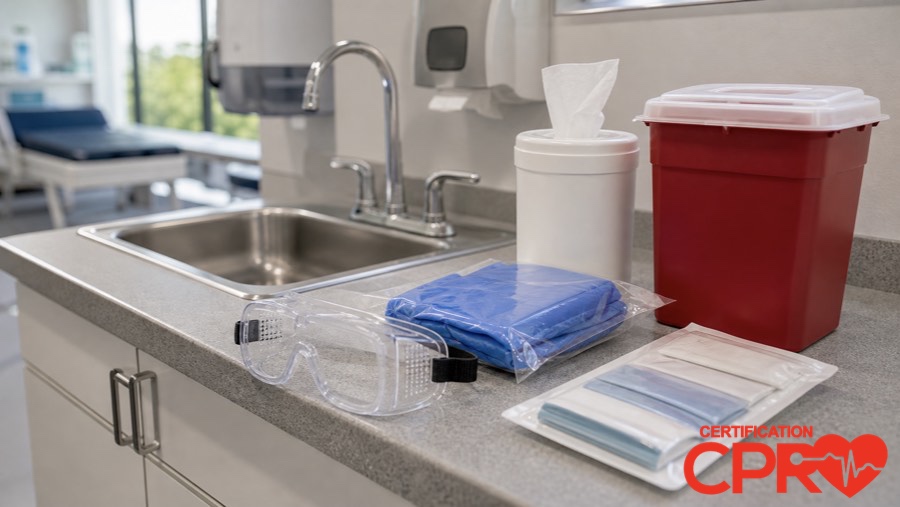
Healthcare workers know blood exposure is possible, but the risk can feel routine until something actually happens. A needle slips. A tube breaks. Blood splashes near the eye. A glove tears during cleanup. In that moment, useful training does not ask the worker to diagnose the source patient or calculate risk on the spot. It helps the worker recognize a true exposure and move quickly into the facility’s response process.
The three pathogens most often discussed in healthcare training are hepatitis B virus, hepatitis C virus, and HIV. They all can be connected to blood exposure, but they do not behave the same way. Hepatitis B is tied closely to vaccination and surface-cleaning habits. Hepatitis C is tied closely to follow-up and early detection. HIV is tied closely to urgent evaluation after a possible exposure.
The first hour after an exposure is where calm habits matter. Wash or flush the exposed area. Report the incident. Get the right person involved. Let occupational health, the emergency department, or the facility’s designated medical process decide the testing, medication, and follow-up sequence. Training should make that handoff faster and cleaner.
In Jacksonville, bloodborne pathogen exposure risk is a real concern for people working in clinics, dental offices, labs, school health rooms, body-art studios, and healthcare settings tied to Baptist Health, UF Health Jacksonville, Mayo Clinic Florida, Ascension St. Vincent’s, and HCA Florida Memorial Hospital.
Upcoming CPR Class Dates and Times
The first safe actions stay practical: protect skin and eyes, stop the task, wash or flush what needs immediate care, and report the exposure through the workplace, school, or occupational health channel that applies.
How Bloodborne Pathogens Are Transmitted in Healthcare Settings
The transmission routes for bloodborne pathogens are specific. They are not spread by shared air or ordinary casual contact. In healthcare work, concern rises when blood or certain body fluids reach the bloodstream, mucous membranes, or broken skin. Needlestick injuries, cuts from contaminated sharps, and splashes to the eyes, nose, or mouth are the main incidents workers are trained to notice.
Intact skin is an important barrier. Blood on unbroken skin is handled differently from blood reaching an eye, mouth, cut, abrasion, puncture wound, or irritated skin. Training helps workers sort that out without minimizing the event. The answer is not panic, and it is not dismissal. The answer is to clean the area, report accurately, and let the facility’s response process decide what comes next.
Needlestick injuries receive so much attention because they can place contaminated material beneath the skin before a worker has time to react. The device, depth, blood volume, and task all matter to the medical team reviewing the exposure. The worker does not need to solve that analysis alone. They need to report the incident with enough detail for occupational health or the evaluating clinician to make the right call.
Hepatitis B Risk and Prevention
Hepatitis B remains central in healthcare exposure training because it is a serious bloodborne virus and because vaccination is part of how many healthcare workplaces reduce risk. A worker should know their own vaccination record through the proper workplace or medical channel and should know who to contact if an exposure happens.
Hepatitis B also keeps surface cleaning in the conversation. Blood on a bed rail, counter, instrument tray, glucose meter, or piece of equipment should be handled through the facility’s cleaning and disinfection procedure. Workers should not decide a surface is safe because the blood looks dry or because the patient does not appear ill.
After a possible hepatitis B exposure, the facility’s occupational health or medical process should review vaccination history and decide what follow-up is appropriate. The worker’s job is to report quickly and accurately. Delays make it harder for the medical team to use the full set of options available for that specific exposure.
Hepatitis C Risk and Early Detection
Hepatitis C is different from hepatitis B because workers cannot rely on a vaccine as part of prevention. That makes exposure prevention, careful sharps handling, and follow-up after a possible exposure especially important. A worker may not feel sick after an exposure, and the absence of symptoms does not answer the question.
Follow-up matters because hepatitis C can be treated far more effectively when it is identified early. The worker should not decide alone whether testing is needed or skip follow-up because the incident seemed minor. Occupational health or the evaluating clinician should decide the follow-up plan based on the exposure details and current medical guidance.
The practical lesson for healthcare teams is steady reporting discipline. A needlestick report is not finished when the first form is filed. The worker needs to follow the facility’s instructions, attend any scheduled evaluation, and keep the exposure process from disappearing into a busy shift change.
HIV Risk and the Post-Exposure Window
HIV exposure is often discussed with a mix of fear and misunderstanding. The risk from any one incident depends on the details, and a worker should not try to settle that question in the hallway. A possible HIV exposure deserves prompt medical evaluation because some follow-up options are time-sensitive.
Reporting pathways have to be clear before the exposure happens. A needlestick late at night, a splash during a weekend shift, or an incident during a busy procedure should not leave the worker wondering who to call. Facilities should have a defined route for urgent evaluation, and workers should know that route before they need it.
HIV prevention in daily healthcare work still comes back to the basics: avoid sharps injuries, use protective equipment correctly, protect eyes and mucous membranes when splashes are possible, and report possible exposures immediately. The specifics after that belong to the medical team evaluating the incident.
High-Risk Roles and Why They Matter
Not all clinical roles carry the same exposure profile. Nursing staff who perform phlebotomy, IV placement, wound care, and glucose monitoring multiple times per shift face a different day than an administrator who occasionally enters a patient room. The work itself determines where the risk lives.
Surgical teams face concentrated exposure during procedures. Sharps, blood, speed, and crowded movement around the sterile field create conditions where injuries can happen even to experienced clinicians. A rushed handoff, an unexpected movement, or a full sharps container can matter as much as the procedure itself.
Laboratory workers face a different set of risks around specimens, tubes, uncapping, spills, and equipment handling. Environmental services workers may face risk after the clinical task is over, when they are cleaning a room, removing waste, or handling laundry. Training works best when each role can connect the same bloodborne pathogens principles to the tasks they actually perform.
Upcoming CPR Class Dates and Times
Good healthcare training also helps workers speak up sooner. A new employee may hesitate because they do not want to slow down the unit. An experienced clinician may be tempted to keep moving because the puncture seems small. A lab worker may clean the spill first and report later. The safer habit is to treat exposure reporting as part of patient-care quality, not an interruption of it. Fast reporting protects the worker and gives the facility better information about where its process needs attention.
That same habit applies after the incident. A worker should know who receives the report, where evaluation happens, and how follow-up instructions will be delivered. The exact medical sequence belongs to the facility and clinician, but the worker should never have to invent the next step alone during a busy shift.